
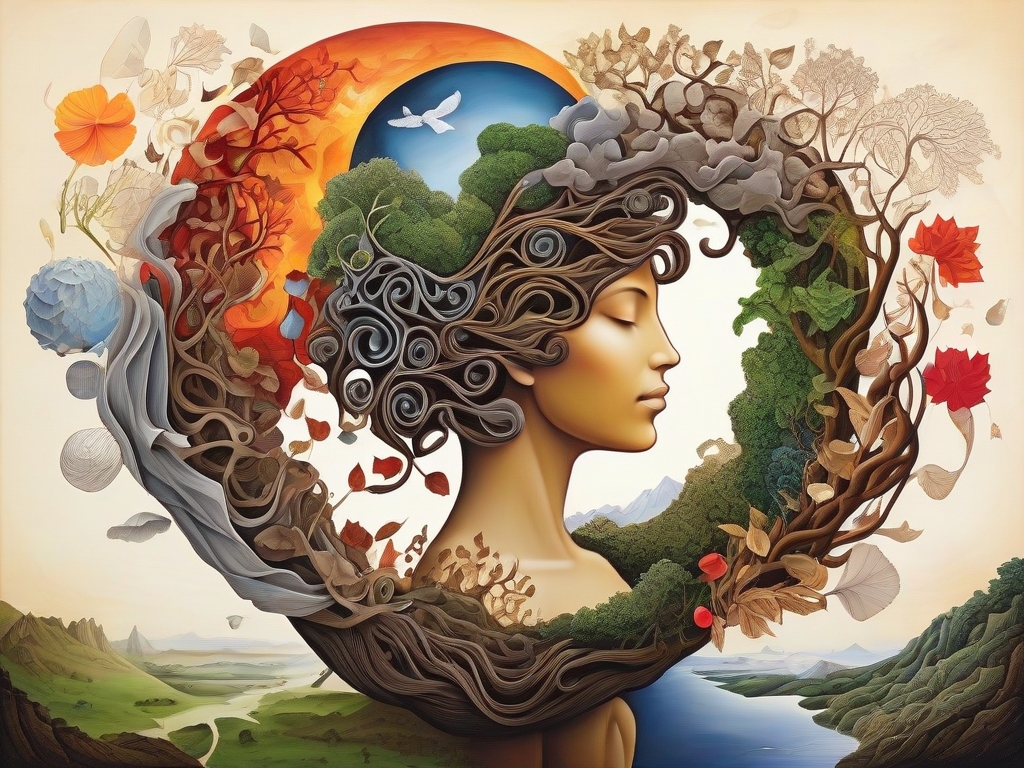
Greetings, fellow travelers on the inward path.
If you were to sit in absolute stillness, in a room devoid of all external noise, what would you hear? Beyond the settling of the walls and the hum of the distant city, you would eventually become aware of a rhythm. It is a sound so constant we often cease to hear it, a cadence that has been with us since the moment we emerged into this world: the soft, oceanic swell of the inhalation, and the gentle, releasing tide of the exhalation.
This is the silent music that orchestrates the symphony of life within us. We often mistake breath merely for air—a biological necessity to fuel the furnace of the cells. Yet, the ancient seers of the Vedic traditions knew it to be something far more profound. They saw breath as the physical manifestation of Prana, the vital life force that animates the cosmos.
To understand Prana, we must look beyond the microscope. Think of your body as a magnificent, ancient cathedral filled with thousands of unlit candles. The structure is there, the wax is waiting, the wicks are primed. Air is merely the breeze blowing through the open doors. But Prana? Prana is the flame itself. It is the subtle, unseen electricity that jumps from wick to wick, illuminating the cathedral, casting warm light into the darkest corners of your being, transforming a cold stone structure into a sanctuary of vibrant living energy.
Without this sacred current, we are merely flesh and bone. With it, we are a dynamic interplay of body, mind, and spirit, woven together in a seamless dance.
In our modern western lives, however, our inner symphony is often wildly out of tune. The demands of the day, the anxieties of the future, and the regrets of the past act like a chaotic conductor, frantically waving the baton. Our breath becomes shallow—a frantic staccato drumming against the upper chest. The violins of our nerves shriek in high tension; the deep, grounding cellos of our gut fall silent. We survive, but we do not sing. This dissonance, in yogic philosophy, is the root of much of our “dis-ease.”
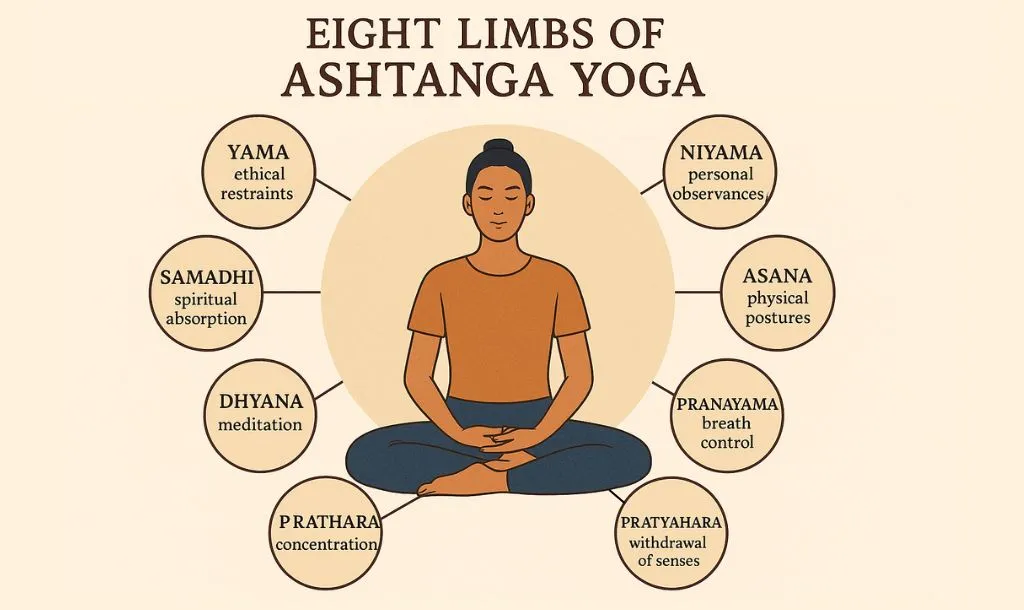
This is where the exquisite art of Pranayama—the yoga of breath control—enters as our salvation. The word itself gives us a clue: Prana (life force) and Ayama (extension or expansion). Pranayama is not just “deep breathing”; it is the deliberate expansion of our aliveness.
When we begin to breathe consciously, we gently take the baton back from the chaotic conductor of stress. We become mindful musicians. We learn to draw the breath deep into the basin of the pelvis, soothing the frantic drumming of the heart. We learn to exhale slowly, smoothly, releasing the stored tension in our shoulders and jaw, quieting the shrieking violins of the anxious mind.
Through practices like Ujjayi (the victorious breath), where we create a soft, ocean-like sound in the throat, we give our wandering minds an anchor. The sound becomes a mantra, a lullaby that coaxes the nervous system out of “fight or flight” and into “rest and digest.”
Yet, the deepest magic of the breath lies not just in the flowing river of air, but in the stillness between the waves.
The ancient texts speak with great reverence of Kumbhaka, the retention of breath. It is the sacred pause. It is that suspended moment at the top of an inhalation before the tide turns, and the empty, profound silence at the bottom of an exhalation before the new wave begins.
In that pause, time seems to stop. The chatter of the mind ceases. It is in this stillness that the veil between the physical and the spiritual is thinnest. To breathe consciously, and to rest in these sacred pauses, is to touch the pulse of the universe itself. We realize that the energy flowing through our veins is the same energy that unfurls the fern frond and spins the galaxies. We are not separate from the whole; we are a solitary, beautiful note in the universal composition.
By tuning our own instrument through the breath, we awaken the dormant light within. We move through the world with greater grace, less reactivity, and a profound sense of connection to the unseen web of life. The symphony becomes harmonious, and finally, we can hear the music we were born to play.
This journey into the subtle realms of Prana is one of the most transformative aspects of yoga, yet it is often difficult to navigate alone. It requires guidance, patience, and a sacred space in which to explore.
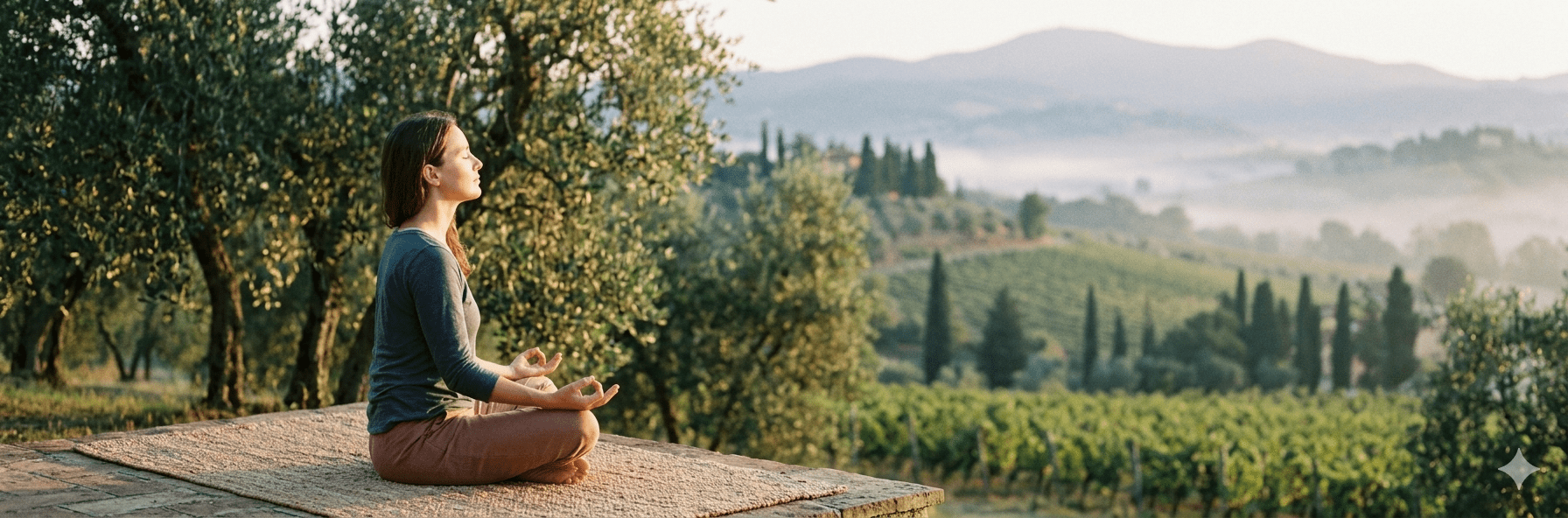
I warmly invite you to move beyond the words on this screen and experience this reality for yourself. Come to the beautiful hills of Fiesole, Italy, and join us at Yogasole. Under the expert and compassionate guidance of Aroonji, you can immerse yourself in the authentic depths of these ancient yogic arts. Here, you will not just learn about the breath; you will learn to become the breath, tuning your life to a higher resonance.
As you move through your day today, notice: when does your breath become shallow, and what changes in your mind when you consciously offer yourself the gift of a single, deep, slow exhalation?

0 Comments