
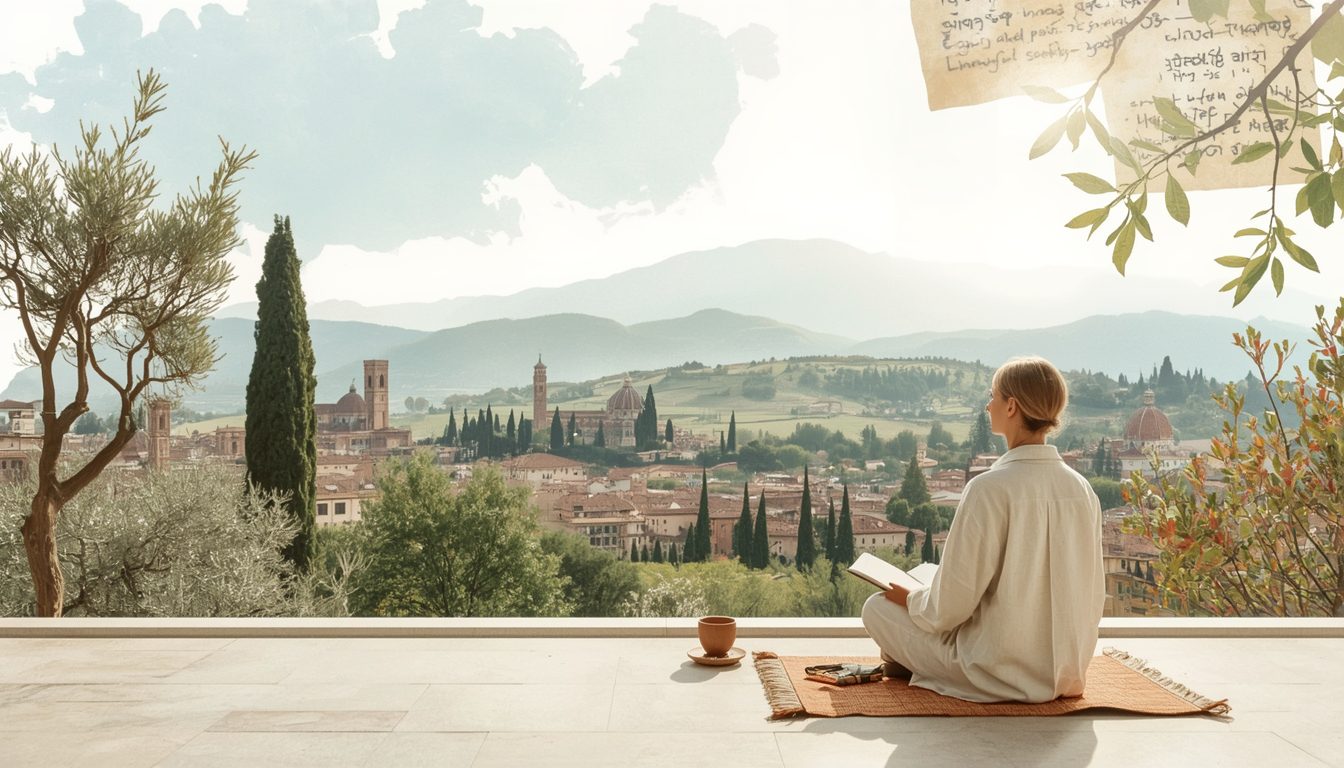
“If Yama is the fence that protects the garden, Niyama is the daily tending that teaches the garden how to bloom. It is the art of becoming a place where the soul can sit down in peace.” — Aroonji
Many people meet yoga through the body, but the sages did not begin there alone. In the architecture of aṣṭāṅga yoga, Patañjali names eight limbs in Yoga Sutra 2.29, and places Niyama immediately after Yama. If Yama teaches us how not to disturb the outer world, Niyama teaches us how to cultivate the inner one. In 2.32, he lists the five niyamas as śauca (purity), saṃtoṣa (contentment), tapas (discipline or purifying heat), svādhyāya (self-study and study of sacred wisdom), and īśvarapraṇidhāna (devotion or surrender to the Divine). And just before this, in 2.28, he says that by practicing the limbs of yoga, impurities are worn away and knowledge begins to shine. (Shlokam)
The sutra is simple and luminous:
शौचसंतोषतपःस्वाध्यायेश्वरप्रणिधानानि नियमाः ॥ २.३२॥
śaucasaṃtoṣatapaḥsvādhyāyeśvarapraṇidhānāni niyamāḥ
“Purity, contentment, discipline, self-study, and surrender to Ishvara are the niyamas.”
If Yama is about how we relate ethically to life, Niyama is about the atmosphere we create within ourselves. It is the second limb because the inner house must be tended, not merely defended. A person may avoid harming others, yet still live with inner clutter, restless desire, laziness, confusion, and spiritual dryness. Niyama is how we sweep, water, prune, and open the shutters of the inner home.
A mountain spring does not become clear by argument. It becomes clear when mud settles and fresh water keeps moving. Niyama is this fresh movement. Without it, yoga can remain a costume. With it, yoga becomes a climate.
And Patañjali does not speak of these observances as decorative virtues. In Sutras 2.40–2.45, he gives each niyama a fruit: purity leads toward cheerfulness, concentration, and fitness for Self-realization; contentment yields deep happiness; tapas burns impurity and strengthens body and senses; svādhyāya brings communion with one’s chosen deity; and īśvarapraṇidhāna ripens toward samādhi. (Shlokam)
Why Niyama matters
Niyama matters because the mind cannot rest in a room that is inwardly neglected. If the first limb teaches us how not to poison the soil, the second teaches us how to make the soil fertile. Without Niyama, meditation often becomes like trying to light a lamp in a windy courtyard. The flame may appear for a moment, but it cannot stay.
In modern life this is even more relevant. We live surrounded by speed, noise, comparison, stimulation, appetite, and digital overexposure. Many people are not tired because life is inherently too heavy; they are tired because too many inner doors are standing open. Niyama helps us close what drains us and nourish what steadies us.
Here in Italy, where life can be wonderfully sensual, relational, and full of beauty, Niyama becomes especially precious. It helps us enjoy beauty without becoming enslaved by it, share warmth without losing boundaries, and live richly without living in excess. In this way, Niyama is not anti-life. It is what keeps life from spilling everywhere.
1. Śauca — purity
Śauca is often translated as cleanliness or purity, but it is deeper than hygiene. It means clarity in body, environment, senses, and mind. It is the difference between a window and a stained window: the light is the same, but one of them allows it to enter.
A forest after rain has śauca. The air feels washed. The leaves glisten. Nothing extra has been added; what was covering life has simply been rinsed away.
In modern life, śauca begins with the obvious: the food we eat, the air we breathe, the spaces we live in, the order of our rooms, the cleanliness of our habits. But it also includes subtler forms of purity: what we consume online, the kind of conversations we keep feeding, the emotional residue we drag from one room to another, the constant mental snacking on bad news, comparison, outrage, and gossip.
In Italy, śauca can be beautifully practiced through simple daily rituals. Open the shutters in the morning and let in light before checking the phone. Keep the kitchen clean and cook with ingredients that still remember the earth. Walk through your home and remove what creates heaviness. Refuse the kind of conversation that leaves a bitter taste after the espresso is gone. Even your digital life needs śauca: fewer notifications, fewer tabs, fewer voices entering your nervous system uninvited.
Patañjali’s classical wording about śauca is strong: he says purity leads away from bodily obsession and toward mental cheerfulness, one-pointedness, mastery of the senses, and readiness for Self-realization. I read this not as hatred of the body, but as freedom from being hypnotized by it. The clean mirror is useful precisely because it stops demanding all our attention. (Shlokam)
A simple practice:
each morning, purify one physical space and one inner space. A desk and a breath. A floor and a thought. A sink and a sentence.
2. Saṃtoṣa — contentment
Saṃtoṣa is not resignation. It is not passivity, mediocrity, or the refusal to improve life. It is the quiet strength of not making your peace dependent on constant rearrangement of circumstances.
A still lake reflects the moon not because it possesses the moon, but because it has stopped thrashing.
Contentment in modern life is revolutionary because almost everything around us is designed to make us feel insufficient. Buy more. Do more. Become more visible. Curate yourself better. Upgrade the body, the wardrobe, the home, the holiday, the identity. Saṃtoṣa says: pause. See what is already here. Learn the holiness of enough.
This does not mean we abandon aspiration. It means aspiration is no longer driven by a wound. You may still build a business, heal a relationship, train the body, write the book, move cities, or study deeply. But the movement becomes cleaner when it is not secretly trying to complete a self that has forgotten its own wholeness.
In Italy, saṃtoṣa may be practiced in wonderfully ordinary ways: taking a simple caffè at the bar without needing to turn the moment into content; enjoying a plate of seasonal food without wishing it were somewhere trendier; walking a quiet passeggiata without comparing your life to someone else’s glossy version of living. Contentment is also needed in family life, where expectations and old emotional patterns can be strong. Saṃtoṣa allows affection without control, appreciation without possession.
Patañjali says it beautifully and directly: santoṣād anuttama sukhalābhaḥ — from contentment comes unsurpassed happiness. Not temporary pleasure. Not distraction. Not the brief intoxication of getting what you wanted. A deeper happiness. A happiness that does not tremble every time life changes shape. (Shlokam)
A simple practice:
at the end of each day, write down three things that were already enough.
3. Tapas — disciplined fire
Tapas is one of the most misunderstood words in yoga. It is often reduced to strictness, but real tapas is not self-punishment. It is sacred heat. It is the friction that transforms.
The seed does not become a tree by remaining comfortable. It must split. The clay does not become a vessel by staying soft forever. It must meet fire.
Tapas is what allows intention to become embodiment. It is the willingness to do what nourishes you even when mood, laziness, weather, convenience, or fear whisper otherwise. It is the discipline to sit, breathe, study, move, speak honestly, sleep properly, and stop feeding what weakens you.
In modern life, tapas may look less dramatic than people imagine. It may mean putting the phone in another room at night. It may mean practicing before emails. It may mean keeping your word. It may mean finishing the difficult conversation you would rather avoid. It may mean not numbing yourself every time discomfort arises. Tapas is not harshness; it is consistency with soul.
Here in Italy, tapas is especially relevant because pleasure is woven lovingly into life—good food, long evenings, warm company, beauty, leisure, celebration. These are gifts. But gifts become chains when there is no inner fire to guide them. Tapas allows you to enjoy pleasure without drowning in it. It helps you say, “This is beautiful, and I do not need too much of it.” It is what lets a spring morning in Tuscany become a practice of awakening instead of only another pleasant blur.
The Bhagavad Gītā enriches this beautifully. In 17.16, it describes mental tapas as serenity of mind, gentleness, silence, self-control, and purity of motive. This is important. Tapas is not merely gritting your teeth; it is refining the inner instrument. And Patañjali adds that through tapas, impurity is reduced and strength arises in body and senses. (Shlokam)
A simple practice:
choose one non-negotiable discipline for 40 days. Let it be small, real, and steady.
4. Svādhyāya — self-study and sacred study
Svādhyāya is one of the most beautiful niyamas because it joins two mirrors: the mirror of the self and the mirror of wisdom. It means studying sacred texts, mantra, and teachings—but also studying your own patterns, reactions, motives, wounds, and recurring stories.
A river that never reflects cannot know its own movement. A mirror covered in dust cannot reveal the face. Svādhyāya is the quiet cleaning of both.
In modern life, many people confuse self-study with overthinking. They are not the same. Overthinking circles. Svādhyāya illuminates. Overthinking tightens. Svādhyāya softens and clarifies. It asks not, “How can I obsess over myself more?” but, “What is really moving in me? What belief is driving this? What fear is speaking through this reaction? What teaching might help me see more clearly?”
This may mean journaling after conflict instead of immediately blaming the other person. It may mean reading one sutra each morning instead of scrolling through ten opinions. It may mean repeating a mantra until the mind becomes less noisy. It may mean noticing how envy, irritation, or self-doubt arrive in the body before they become speech.
In Italy, svādhyāya might happen quietly between worlds: on the train to Firenze, in the stillness after lunch, under the cypress-shadowed slopes of Fiesole, or in the notebook you keep beside the bed. It is especially powerful in relationships, where culture, family closeness, and emotion can stir old identities very quickly. Self-study lets us say, “This moment is not only about what happened outside; it is also revealing something inside.”
Patañjali says that from svādhyāya comes communion with one’s chosen deity or sacred ideal. And the Bhagavad Gītā says, “Let a man lift himself by his own Self.” Together they suggest something profound: the deepest study is not sterile analysis, but a way of aligning the small self with the deeper one. (Shlokam)
A simple practice:
read four lines of a wisdom text each morning and write one honest sentence about what they reveal in you.
5. Īśvarapraṇidhāna — surrender to the Divine
Īśvarapraṇidhāna is perhaps the most tender of the niyamas. It is the bowing of the heart. It is the recognition that effort matters, but effort is not the whole mystery.
A sail is useful, but only when it learns to receive the wind.
This niyama does not ask for passivity. It does not mean “do nothing and call it surrender.” It means do what is yours with sincerity, and release what is not yours to control. Offer the work. Offer the fear. Offer the result. Offer the identity that insists everything must obey your timetable.
In modern life, this is medicine. We live as though anxiety were a form of devotion, as though obsessive control were intelligence. Īśvarapraṇidhāna reminds us that a clenched fist cannot pray and cannot receive.
In everyday terms, this may mean preparing carefully for a project and then not collapsing if the outcome shifts. It may mean loving a child without trying to author their destiny. It may mean showing up for healing without forcing life to move at the speed of your impatience. It may mean bringing your whole being to a relationship, while knowing that another person still remains a mystery.
Here in Italy, surrender can be practiced in the most human of places: when plans soften under weather, when bureaucracy moves like old stone, when travel, timing, or expectation refuses to follow your script. The olive tree does not command the season. It cooperates with it.
Patañjali says that through devotion to Īśvara, samādhi ripens. And here we hear something that distinguishes yoga from many Western ethical systems: self-mastery is not the end. Relationship to the sacred is part of the path. (Shlokam)
A simple practice:
at the end of the day, place one unresolved thing inwardly on the altar and say, “I have done my part. Now I release the rest.”
A Western mirror: Niyama and Stoic practice
“While we are postponing, life speeds by.” — Seneca (stoicsource.com)
There is a beautiful bridge here with Western philosophy, especially the Stoics. The Stoics also saw philosophy not as intellectual decoration but as a daily discipline for living well. They held that happiness depends on virtue, and they organized virtue around wisdom, justice, courage, and moderation. Epictetus begins his manual with the distinction between what is in our control and what is not—an insight that harmonizes strongly with tapas, saṃtoṣa, and īśvarapraṇidhāna. (Internet Encyclopedia of Philosophy)
Musonius Rufus, one of the great Roman Stoics, insisted that philosophy should develop good character, a sound mind, and a sturdy body, and that practice matters more than theory. He also praised frugality and austere habits. This makes him feel, at times, like a distant Roman cousin of Niyama—especially of tapas and śauca. Seneca, too, describes the practice of examining the day and asking what fault was resisted and in what way one had become better, which resembles svādhyāya’s honest inner review. (Internet Encyclopedia of Philosophy)
Still, they are not identical. Stoicism leans toward living in agreement with reason and nature; yoga includes that kind of discipline, but also opens explicitly into devotion, sacred remembrance, and samādhi through īśvarapraṇidhāna. Stoic practice can cleanse and strengthen the vessel; yoga, in this limb, also teaches the vessel how to bow. (Internet Encyclopedia of Philosophy)
How to begin, gently…
“Some things are under our control, while others are not.” — Epictetus (stoicsource.com)
Do not try to perfect all five niyamas in one heroic week. That only turns spirituality into ambition wearing incense.
Begin quietly.
Clean one corner of your life.
Practice gratitude before appetite.
Keep one small discipline.
Read one line that tells the truth.
Release one thing you cannot control.
That is already Niyama.
Niyama is not a cage. It is a tuning. It is how the instrument of your life is brought back into resonance. The violin string is not made beautiful by looseness. Nor by being tightened until it snaps. It becomes beautiful when it is tuned.
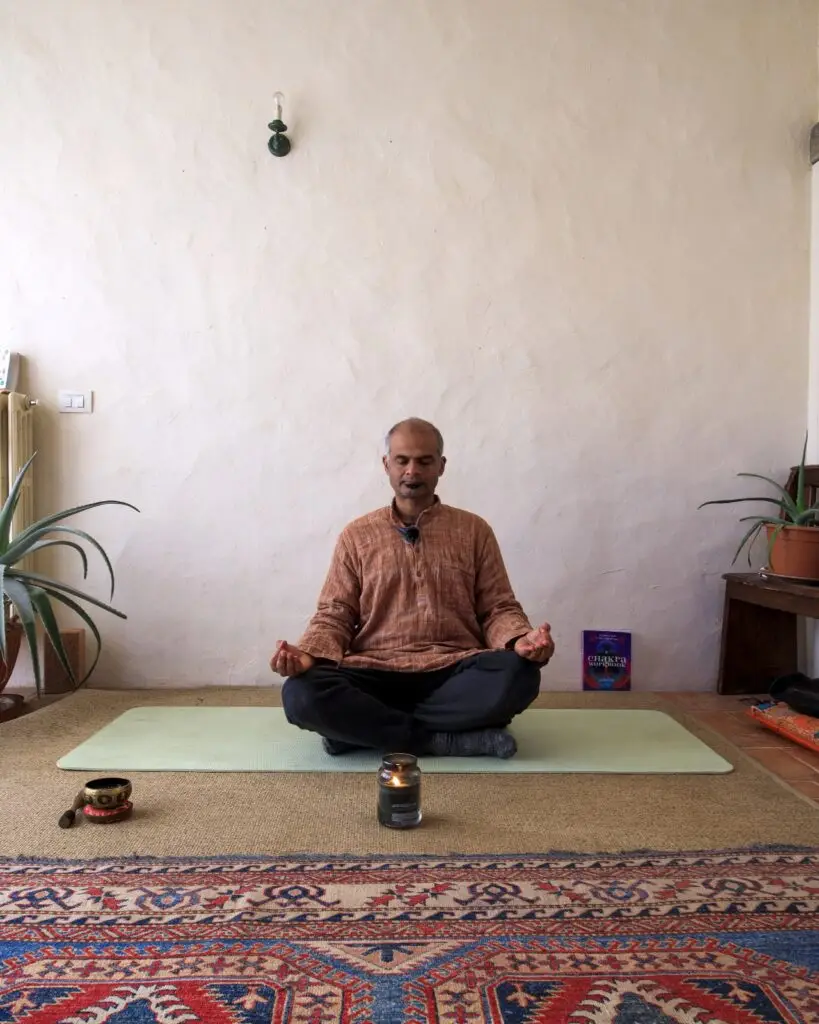
To learn and experience the wisdom of the Vedas with Aroonji—an experienced yoga teacher, Ayurveda expert, life coach, and spiritual guide, born and raised in India—you are warmly welcome. He offers private sessions for groups or individuals, and you can also join existing group sessions at YogaSole in Fiesole. YogaSole’s current contact details are yogafiesole@gmail.com and +39 3510278911,
So perhaps the real question is this: what daily inner observance is waiting, not to impress the world, but to make your own being feel more like home? (Yogasole APS)


0 Comments