Sri Yantra is one of the most powerful and mysterious symbols of the yogic tradition, a map of consciousness that unites ancient Vedic wisdom with very modern needs for clarity, balance, and purpose. For yoga students, it can become not only a beautiful image, but a living tool for meditation, alignment, and manifestation in daily life.
What is Sri Yantra?
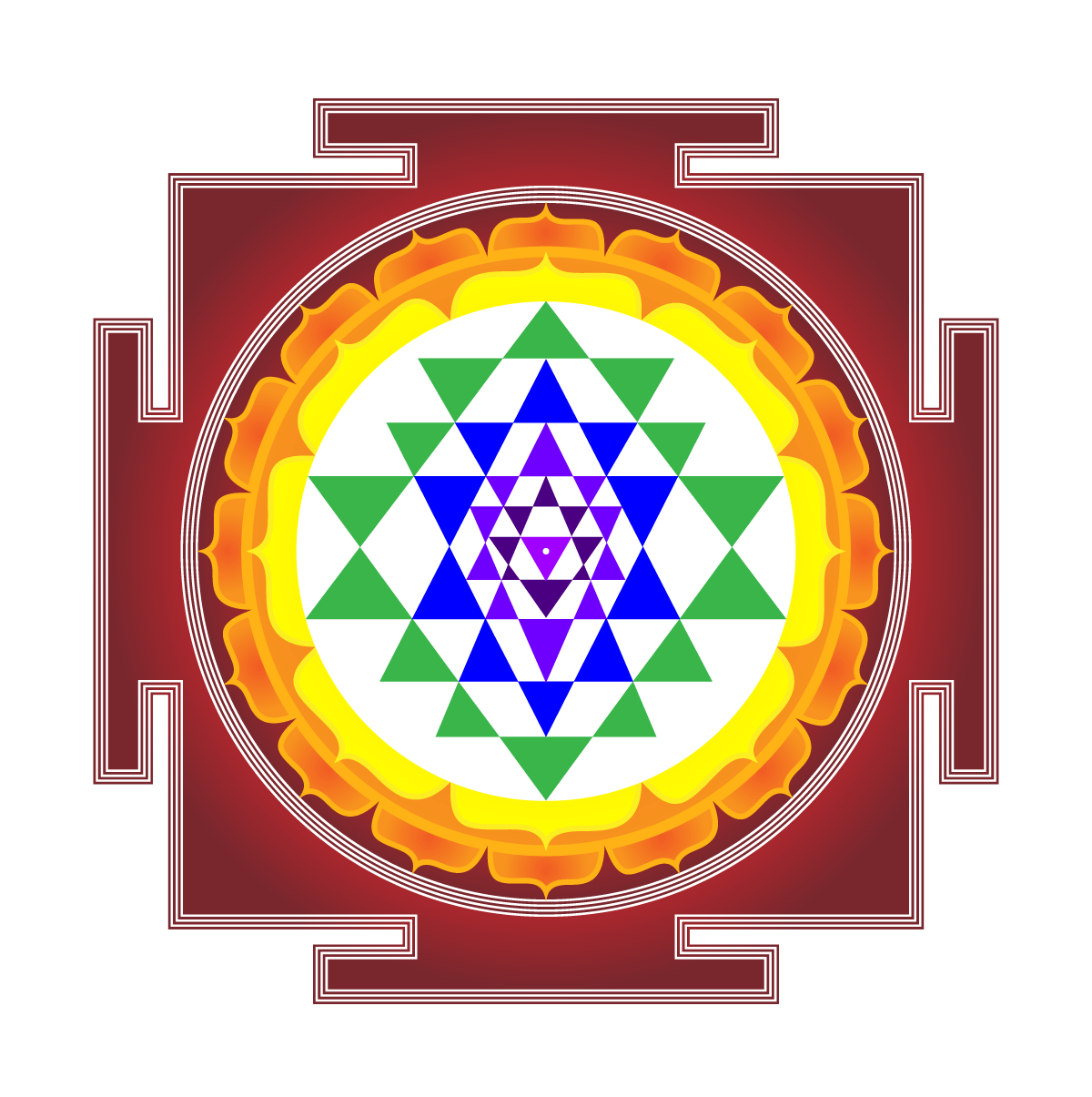
The word “yantra” means “instrument” or “tool,” and “sri” suggests splendor, auspiciousness, and abundance. Sri Yantra (also called Sri Chakra) is a sacred geometric diagram made of nine interlocking triangles surrounding a central point, the bindu, together forming 43 smaller triangles arranged in layers.gaia+3
Four upward-pointing triangles represent Shiva, the masculine principle of awareness and pure consciousness, while five downward-pointing triangles represent Shakti, the feminine principle of energy, creativity, and manifestation. Their interlocking pattern symbolizes the inseparable union of these two forces, and the entire figure is often called the “queen of yantras,” or the mother of all yantras.
Roots in the Vedas and Sri Vidya
The origins of Sri Yantra go back to ancient India, with links to Vedic and Upanishadic teachings that describe creation emerging from a single point (bindu) and expanding through sound, light, and vibration. Within the Sri Vidya tradition, Sri Yantra is understood as the geometric body of the goddess Tripura Sundari, representing the fullness of reality: matter and spirit, form and formless, individual and universal.
Vedic philosophy speaks of the universe as a unified field where all apparent opposites are expressions of the same consciousness, and Sri Yantra gives this teaching a visual structure. The outer squares and lotuses represent the manifest world and the senses, the middle triangles represent different levels of mind and subtle energies, and the bindu at the center represents the non-dual Self, or pure awareness.
Symbolism as a map of practice
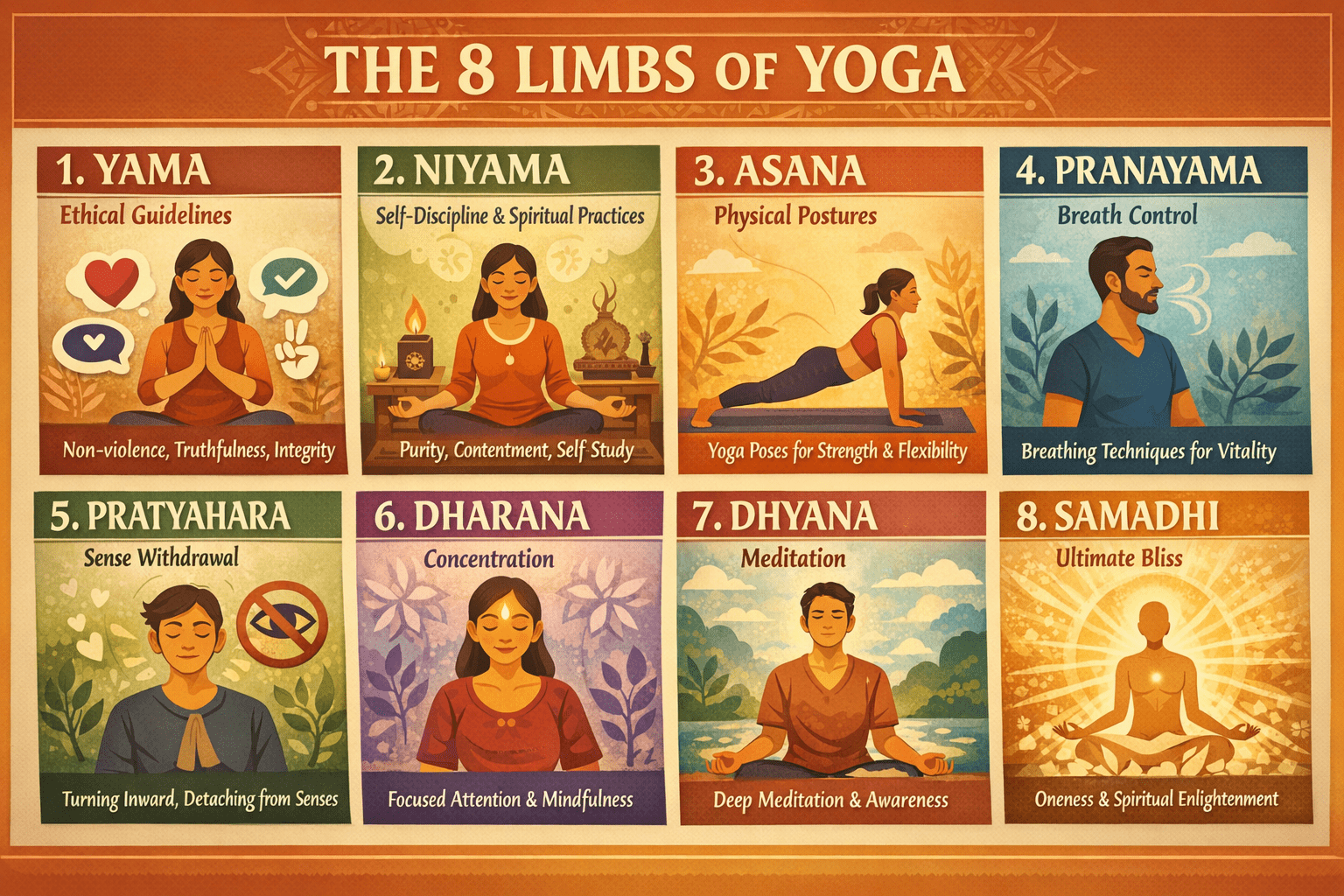
Sri Yantra can be read like a map of the entire spiritual journey. The outer “earth square” suggests boundaries, protection, and the first steps of discipline and ethics, much like yama and niyama in yoga. The lotus rings symbolize purification and the opening of the heart as awareness deepens beyond purely material concerns.kathleenkarlsen+2
Moving inward through the layers of triangles reflects the refinement of mind through asana, pranayama, pratyahara, and meditation, where the practitioner gradually turns from outward distraction toward inner stillness. Finally, the bindu at the center corresponds to samadhi, the recognition of non-duality and the direct experience that all forms arise from and return to the same consciousness.
How yoga students can use Sri Yantra
For modern yoga students, Sri Yantra can be a practical meditation aid and a mirror for inner work, not just an esoteric symbol. Gazing softly at the yantra (trataka) helps focus attention, calm mental chatter, and draw awareness from the periphery of life toward the center of the Self. Even short, regular sessions of 5–10 minutes of yantra contemplation can cultivate steadier attention and greater emotional balance.lovenspire+2
Sri Yantra can be placed in a clean, respectful space in the home or studio, ideally where you practice yoga or meditate, to remind the mind of harmony and alignment. It is traditionally associated with both spiritual and material abundance, so students may work with it when seeking clarity around life purpose, finances, relationships, or creativity, using it as a symbol to align desires with deeper wisdom and dharma.
Simple practice suggestions for daily life
One accessible way to work with Sri Yantra is to begin each day by sitting quietly in front of it, taking a few conscious breaths, and setting an intention that feels truthful, such as “May my actions today come from clarity and compassion.” You can gently trace the image with your eyes from the outermost lines inward, feeling yourself journey from the busyness of the world toward the stillness of the heart.
In the evening, you can return to the yantra for a short reflection, observing how your day expressed the dance between Shiva (awareness) and Shakti (energy) — where you reacted from habit and where you responded from presence. Over time, this simple ritual helps anchor yogic teachings into concrete choices: how you speak, how you work, how you relate, and how you care for your body and mind.
Sri Yantra and modern challenges
In a world of constant notifications, speed, and fragmentation, Sri Yantra offers a visual antidote: a reminder that complexity can be held within a deeper order, and that chaos can be integrated without losing center. For students dealing with stress, anxiety, or a sense of being “pulled in many directions,” the yantra’s symmetry encourages a return to balance and an embodied sense of “I am at the center of my life, not at the mercy of it.
Because it unites the masculine and feminine principles, Sri Yantra can also support healing around inner polarity — doing and being, structure and flow, logic and intuition — helping students honor both their capacity to act in the world and their need for rest, feeling, and receptivity. In this way, it becomes a gentle teacher of integration, which is at the heart of yoga.
Bringing the Vedic wisdom into your practice
Ultimately, Sri Yantra presents the wisdom of the Vedas in a single living image: everything is interconnected, everything arises from one source, and that source is not outside you but shining at the center of your own awareness. Working with this yantra is less about “believing” something and more about training the mind and heart to experience this unity directly — on the mat, in relationships, in work, and in quiet moments alone.
For Yogasole students, Sri Yantra can serve as a shared symbol of the path: a reminder that each breath, each posture, each decision in daily life can move from the outer edges of distraction toward the inner bindu of presence. Placed in your home or practiced together in the studio, it invites you to live Vedic wisdom not as an ancient philosophy, but as a modern, embodied way of being.

0 Comments