
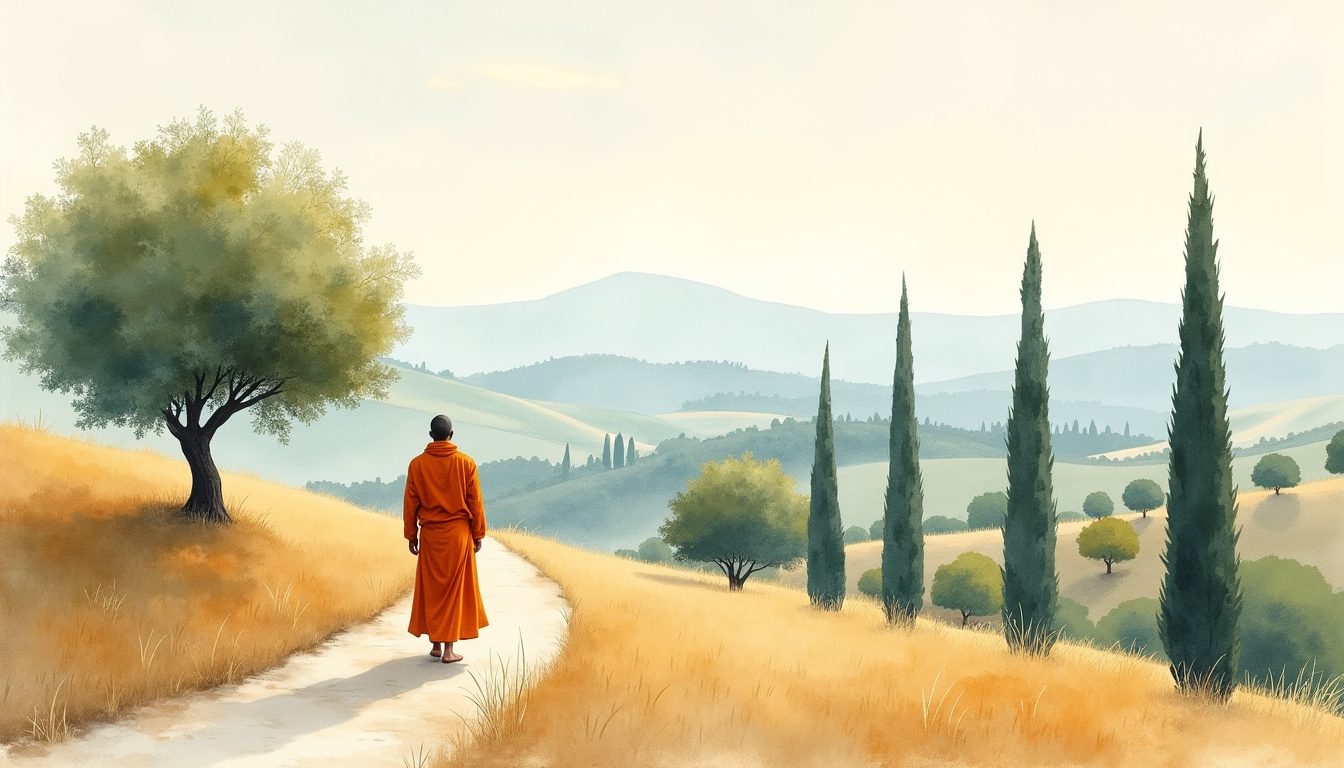
“Before the body becomes a temple of yoga, the heart must learn how not to wound. Yama is the invisible posture that makes every other posture honest.” — Aroonji
In the modern world, many people meet yoga through the doorway of the body. They arrive through stretching, breathing, mobility, posture, perhaps even aesthetics. But in the classical river of yoga, the first stone is not the handstand. It is character.
Patañjali places Yama at the very beginning of the eight limbs of yoga. In Yoga Sutra 2.29, Yama is named as the first limb; in 2.30, the five yamas are listed as ahiṃsā (non-harming), satya (truthfulness), asteya (non-stealing), brahmacarya (wise use of vital energy, traditionally continence), and aparigraha (non-grasping or non-hoarding). Then, in 2.31, he says these are a sārvabhauma mahāvratam—a universal great vow, not limited by place, time, status, or circumstance. In other words: Yama is not a mood, not a costume, not something we wear only on the mat. It is a way of being human. (Shlokam)
The sutra is beautifully simple:
अहिंसासत्यास्तेयब्रह्मचर्यापरिग्रहा यमाः ॥ २.३०॥
ahiṃsā-satya-asteya-brahmacarya-aparigrahā yamāḥ
जातिदेशकालसमयानवच्छिन्नाः सार्वभौमा महाव्रतम् ॥ २.३१॥
jāti-deśa-kāla-samaya-anavacchinnāḥ sārvabhaumā mahāvratam (Shlokam)
Yama is like the root system of an olive tree. We do not gather under the tree to admire its roots, yet without them there is no trunk, no leaf, no fruit, no shade. In the same way, without Yama, yoga can become performance, flexibility, or self-image. With Yama, practice becomes nourishment. Without it, even spirituality can become another form of appetite.
Why Yama matters
Why does Patañjali begin here?
Because a disturbed conscience cannot easily become a still mind. A person who harms, deceives, grasps, drains themselves, or takes what is not theirs may still look calm from the outside, but inwardly the waters remain muddy. Yama clears the stream.
Patañjali also offers a practical method in Yoga Sutra 2.33: when thoughts contrary to yoga arise, cultivate their opposite—pratipakṣa-bhāvanam. And 2.34 makes the teaching sharper: violence, falsehood, and the rest are harmful whether we do them ourselves, cause them, or approve of them. This is startlingly modern. It reaches not only our actions, but our complicity, our comments, our online approval, our quiet indulgence of what we know is unclean in us. (Shlokam)
That is why Yama is important: it does not merely make us “good.” It makes us whole. It aligns speech, impulse, and action so that meditation is not an escape from life, but a deepening of it.
The five Yamas in everyday modern life
1. Ahimsa — non-harming
Ahimsa is the first riverbank. It is often translated as non-violence, but in lived life it means more than avoiding physical harm. It includes the violence of tone, sarcasm, contempt, self-hatred, emotional carelessness, and the subtle aggression of always needing to win.
In nature, ahimsa is like morning dew settling on a leaf. It does not force; it nourishes by contact alone.
In modern life, ahimsa may look like this: you receive a cold email and feel the heat rise in your chest. Instead of sending a sharp reply, you walk, breathe, soften, and answer with clarity rather than venom. Or you notice the violence you use against yourself: “I am useless, lazy, behind, not enough.” Ahimsa begins there too. The inner whip is still a weapon.
Here in Italy, ahimsa can be practiced in the most ordinary places: in traffic when impatience swells at the roundabout; in the café queue when someone moves slowly; at the family table when old roles return and the tongue wants to strike before the heart can listen. In an Italian day, where life is beautifully shared and close to the skin, ahimsa is not abstract. It is the choice to reduce the temperature of the room.
Patañjali says that when ahimsa is firmly established, enmity ceases in one’s presence. I read this both literally and symbolically: a truly non-harming person changes the emotional climate around them. (Shlokam)
A simple practice:
before speaking, ask, Is it true? Is it necessary? Can it be said without leaving a bruise?
2. Satya — truthfulness
Satya is truth, but not truth as blunt force. Yogic truth is truth in service of awakening, not ego. A truth that humiliates is often only disguised aggression. Satya must walk with ahimsa, just as sunlight must walk with warmth.
A tree does not pretend to be a river. Satya is this kind of simplicity: not performing, not curating, not bending reality to protect our image.
In modern life, satya means not living behind masks. It means saying, “I cannot do this by Friday,” instead of inventing excuses. It means not posting a life online that your nervous system is quietly contradicting. It means not saying “I’m fine” when what is needed is an honest, dignified “I’m struggling and I need space.”
In Italy, satya may look like refusing the polite but false social smile when a deeper conversation is needed; it may mean speaking clearly in work relationships, in community spaces, in friendship, and in love—without drama, without theatre, without passive aggression. Not every truth must be spoken immediately, but every life becomes lighter when less energy is spent maintaining illusion.
Patañjali links established truthfulness with a remarkable potency: speech begins to carry force. In simpler language, when you stop lying, your words regain weight. (Shlokam)
A simple practice:
once a day, tell one clean truth you usually avoid.
3. Asteya — non-stealing
Asteya means not taking what is not freely given. This includes money and objects, yes—but also time, attention, ideas, credit, peace, emotional space, and trust.
A bee takes nectar without tearing apart the flower. That is asteya.
In modern life, asteya is violated every day in invisible ways. Interrupting constantly is a form of theft. Taking credit in a team project is theft. Showing up habitually late steals another person’s life. Consuming endless free wisdom without gratitude or reciprocity can become theft of a subtler kind.
In Italy, asteya can be practiced by honoring the artisan, the teacher, the cleaner, the farmer, the waiter—not only with money, but with respect. It lives in paying fairly, waiting your turn, keeping commitments, and not using charm to bypass what others must patiently respect. It can even appear in conversation: not stealing the whole table with your own story.
Patañjali says that when asteya is established, all wealth comes. I do not take this merely as material prosperity. I take it to mean that when grasping ends, trust comes; when trust comes, life opens. (Shlokam)
A simple practice:
Ask, Where am I taking more than I am giving?
4. Brahmacharya — wise direction of life-force
This is often the most misunderstood yama. In traditional language it is linked with continence or chastity, but for many modern practitioners it is better understood as the wise stewardship of energy. Where does your life-force go? What leaks it? What sanctifies it?
Brahmacharya is like a river that does not flood every field at once; because it is contained, it can reach the sea.
In modern life, this means not scattering yourself into a thousand fragments. Not every notification deserves your nervous system. Not every desire deserves obedience. Not every attraction deserves action. Not every invitation deserves a yes.
Here in Italy, where life offers beauty at every corner—food, conversation, romance, pleasure, social warmth—brahmacharya is not a rejection of beauty. It is the art of not drowning in it. It is savoring without excess. It is enjoying an evening without needing to overfill it. It is closing the phone at night and keeping some sacred energy unspent.
Patañjali says that when brahmacharya is established, vīrya, energy or vigor, is gained. Modern people understand this immediately: when our attention is less scattered, our presence becomes stronger. (Shlokam)
A simple practice:
choose one daily leak of energy—doom scrolling, gossip, overcommitting, compulsive messaging—and reduce it by half for one week.
5. Aparigraha — non-grasping
Aparigraha is the unclenching of the fist. It is not only about owning fewer things; it is about being owned by fewer things. Possessions, roles, status, grudges, expectations, even spiritual identity—these can all become clutter in the soul’s attic.
In nature, autumn teaches aparigraha better than any sermon. The tree does not hold its leaves in panic. It lets go because life is moving.
In modern life, aparigraha means buying less to soothe inner emptiness. It means not gripping outcomes so fiercely that the present moment becomes unlivable. It means allowing children, partners, friends, and even old versions of yourself to change. It means not collecting praise like winter wood.
In Italy, aparigraha may be beautifully practiced through simplicity: fewer but better things, more reverence for what is already here, more room in the home and in the heart. In a culture rich with beauty, the temptation is not only consumption but attachment to form, taste, image, and memory. Aparigraha says: enjoy deeply, cling lightly.
Patañjali says that when non-grasping is steady, a deeper knowledge dawns. The classical translation points toward remembrance; for modern readers, I would say this means that when we stop clutching at life, we begin to remember who we are beneath the clutter. (Shlokam)
A simple practice:
each week, release one thing—an object, a resentment, an unnecessary commitment, or the need to control one outcome.
A Western parallel: Yama and the Stoics
“Some things are in our control and others not.” — Epictetus
Western philosophy has its own clear mountain air here. Yama is not identical to Stoicism, but it shares real kinship with it.
The Stoics framed ethics around the cardinal virtues of justice, temperance, courage, and practical wisdom, and described Stoicism as a practical virtue ethics for daily life. Justice concerns how we live with others; temperance concerns self-command; practical wisdom helps us respond well to reality rather than react blindly. Epictetus opens the Enchiridion with the radical reminder that some things are in our control and others are not—a sentence that harmonizes strongly with brahmacharya and aparigraha. (Internet Encyclopedia of Philosophy)
Where the Stoics say that justice grows from concern for an ever-widening circle of people, yoga says ahimsa. Where they say temperance and self-control, yoga says brahmacharya and aparigraha. Where Marcus Aurelius says, “Teach them then or bear with them,” yoga whispers ahimsa again. The languages differ, but both traditions mistrust the tyranny of impulse and ask the human being to become inwardly governed rather than outwardly dragged. (Internet Encyclopedia of Philosophy)
So for a modern reader in Florence, Rome, Milan, or a Tuscan hill town, Yama need not feel foreign. It is yoga’s ethical poetry, but it is also close cousin to the best of ancient Greek and Roman self-mastery: live truthfully, do no harm, do not be ruled by appetite, and remember that your freedom is inseparable from your responsibility.
How to begin, gently
“Men exist for the sake of one another. Teach them then or bear with them.” — Marcus Aurelius
Do not try to perfect all five yamas by Monday morning. That is the ego wearing a spiritual costume.
Begin like spring rain, not like a military campaign.
Choose one yama each week. Journal one evening about where it appears in your day. Use Patañjali’s method of opposite cultivation: when irritation appears, practice gentleness; when greed appears, practice contentment; when compulsion appears, practice pause. Over time, Yama stops feeling like morality imposed from outside and starts feeling like the natural fragrance of a more awake life. (Shlokam)
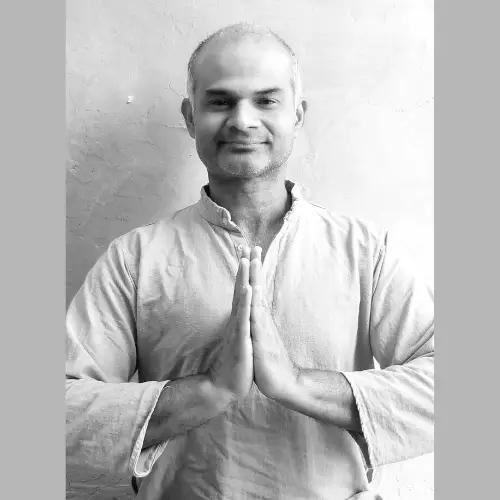
This spring, I will be exploring Yama more deeply in the Sunday meditation classes at YogaSole in Fiesole at 5:00 pm. To learn more and confirm the upcoming dates, reach out directly. YogaSole’s official site lists meditation, workshops, and community offerings in Fiesole.
And if you wish to learn and experience the wisdom of the Vedas with Aroonji—an experienced yoga teacher, Ayurveda expert, life coach, and spiritual guide, born and raised in India and shaped by life across three continents—you are warmly welcome. He offers private sessions for groups and individuals, and you can also join existing group sessions at YogaSole, Fiesole. Contact via WhatsApp at +39-3510278911 or email yogafiesole@gmail.com. (Aroonji)
Yama is not a fence around life. It is the trellis that helps the vine grow toward the sun.
So perhaps the real question is not, “Am I advanced in yoga?”
Perhaps the quieter, truer question is:
In the way I speak, consume, desire, hold, and release—am I becoming safe enough for my own soul to live in?



0 Comments